DIY Catering: An Essential Guide for Home Hosts
How to plan, cook, and serve food for a crowd yourself, from a ten person dinner to a sixty guest celebration, without hiring a caterer.
This DIY catering guide starts with the good news that catering your own event is mostly a planning problem, not a cooking problem. If you can make dinner for your family, you can feed a crowd. The trick is choosing the right menu, doing the math on party food quantities, and building a schedule that keeps you out of the kitchen once guests arrive. This guide walks through the whole process in the order you will actually use it.
DIY Catering Starts With a Menu That Cooks Itself
The best DIY catering menu leans on dishes that hold well, scale easily, and can be finished ahead of time. Pick one or two showpiece items and surround them with simple sides. Avoid menus where three dishes all need the oven at four hundred degrees at the same moment. A good rule is one main, two or three sides, one salad, and a make ahead dessert.
- Choose forgiving mains: braised meats, roasted chicken thighs, pasta bakes, and chili all hold heat well and reheat without drying out.
- Pick sides that sit: roasted vegetables, grain salads, and slaws are happy at room temperature for an hour or two.
- Limit last minute cooking: aim for no more than two dishes that need attention in the final thirty minutes.
- Plan one vegetarian main: it covers dietary needs and doubles as a hearty side for everyone else.
A quality set of half size sheet pans and a couple of large mixing bowls make batch cooking far easier.
Do the Party Food Quantities Math Before You Shop
Running out of food is every host’s fear, and overbuying wastes money. Use simple per person numbers and scale them to your final headcount, then add a ten percent buffer. Write the totals on your shopping list so you are buying to a number, without guessing.
- Main protein: six ounces cooked per person, or about one third pound raw for meats that shrink.
- Starchy side: four to five ounces per person.
- Vegetables: four ounces per person.
- Salad: one to two cups of greens per person.
- Appetizers: six to eight pieces per person in the first hour.
- Drinks: two servings per person for the first hour, one per hour after.
Build Your Cooking Timeline
Work backward from your start time. A written schedule turns a stressful day into a series of small, easy tasks. Anything that can be done the day before should be. The goal is to have ninety percent of the work finished before the first guest knocks.
- Three days out: shop for non perishables, make sauces and dressings, bake anything that freezes.
- One day out: chop vegetables, marinate proteins, assemble casseroles, set the table.
- Morning of: cook braises and bakes, prep the drink station, chill beverages.
- Two hours out: roast vegetables, dress salads at the last minute, warm everything for service.
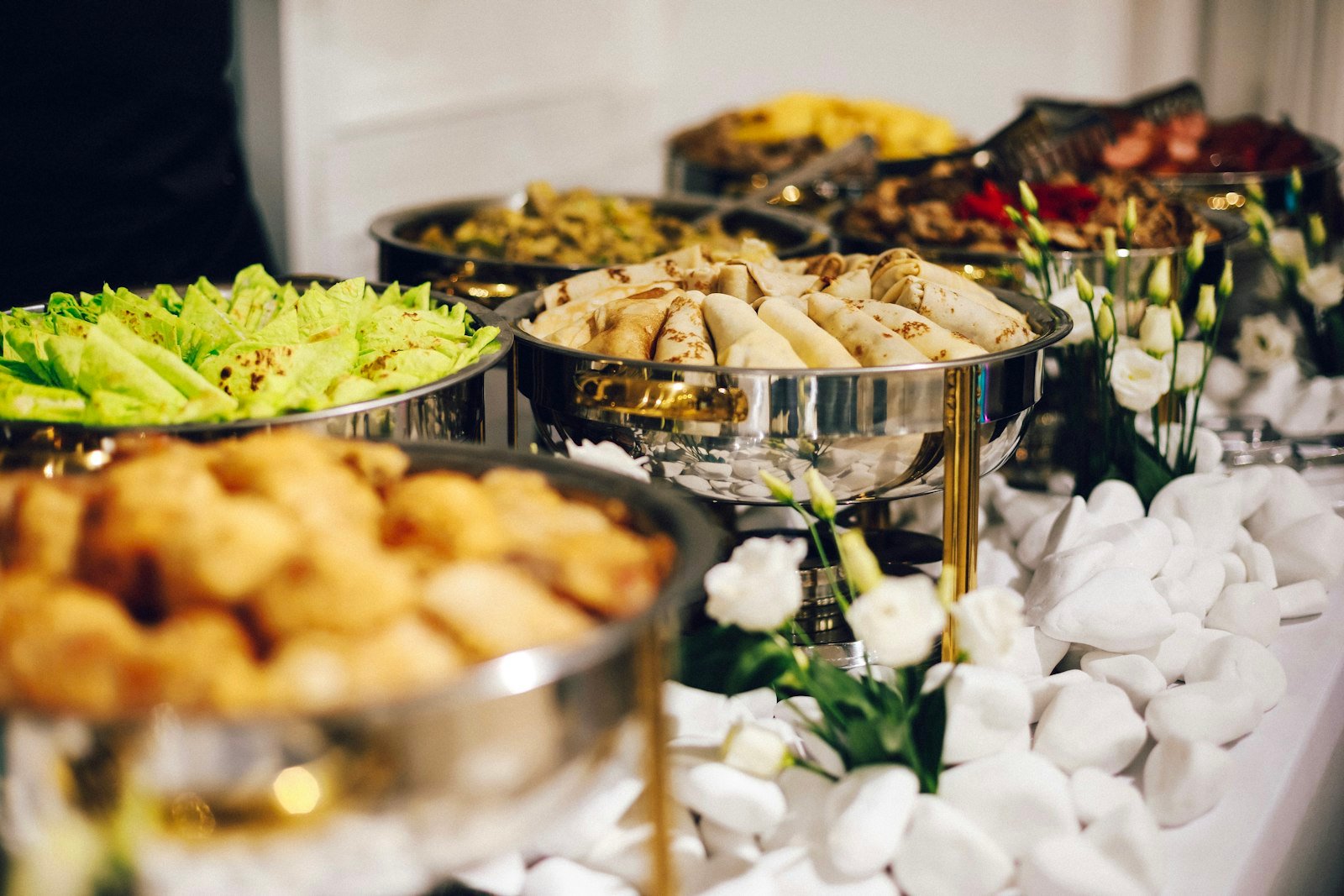
Insulated chafing dishes or slow cookers keep food at safe serving temperatures throughout the party so you are not reheating in batches.
Party Catering: Set Up Serving Station So Guests Serve Themselves
A buffet or family style setup frees you from plating every dish. Arrange the table in the order people will move along it: plates first, then mains, sides, salad, bread, and finally napkins and utensils at the end so hands stay free. Keep serving spoons with every dish and label anything with common allergens.
DIY Catering Questions, Answered
How many dishes should a DIY catering menu have?
For most home events, plan one main, two to three sides, one salad, and a dessert. That gives guests variety without overwhelming your kitchen or your budget. If you are hosting more than thirty people, add a second main rather than more sides, since a protein choice feels more generous. Keep at least half the menu make ahead so you are not juggling five hot dishes at once.
Can I cater my own event for fifty people?
Yes, fifty people is very doable at home with the right plan. When catering for a crowd, the key limits are oven space and serving equipment. Choose a menu built around one or two large-batch dishes like a braise, a pasta bake, or pulled meat, and rent or borrow chafing dishes to hold food warm. Cook in stages over two days, recruit one helper for the final hour, and set up a self-serve buffet so you are not plating fifty meals by hand.
How do I keep food warm during a party?
Use slow cookers on the warm setting, chafing dishes with water pans and fuel, or a low oven set to two hundred degrees. Hot food needs to stay above one hundred forty degrees to be safe. Cover dishes with foil between servings to hold heat, and only set out half the batch at a time so the rest stays hot in reserve. For cold foods, nest serving bowls inside larger bowls of ice.
What is the cheapest way to cater a party?
Build the self catering menu around inexpensive, filling bases like pasta, rice, beans, and potatoes, then add a smaller amount of protein for flavor rather than bulk. Buy in bulk, cook from scratch instead of using prepared trays, and serve a signature punch or batched drink rather than a full bar. A taco bar, pasta station, or baked potato spread feeds a crowd well for a fraction of a catered price.
How early can I start cooking for an event?
Many components can be made three to four days ahead and stored in the fridge, including sauces, dressings, dips, marinated proteins, and most baked goods. Dishes that freeze well, like soups, braises, and casseroles, can be made a week or two in advance. Save only fresh salads, quick-seared proteins, and crisp items for the day of the event. The more you do early, the calmer the final day will be.
Ready to Plan the Menu?
Pair this guide with a printable checklist so every task has a home and nothing slips through the cracks.